
by Uma Zierten-Singleton
You may have heard that Massachusetts is in the process of debating major budget cuts to Mass Save. In February, the MA state House passed an energy affordability bill that directs utilities to cut $1 billion from the state energy efficiency program’s budget for the next year. As the 2025-2026 winter heating season peaked, controversy over rising gas bills made the program an easy target for policymakers looking for a short-term fix to high utility prices. Cutting the Mass Save budget has been promoted as an easy way to reduce energy costs for residents.
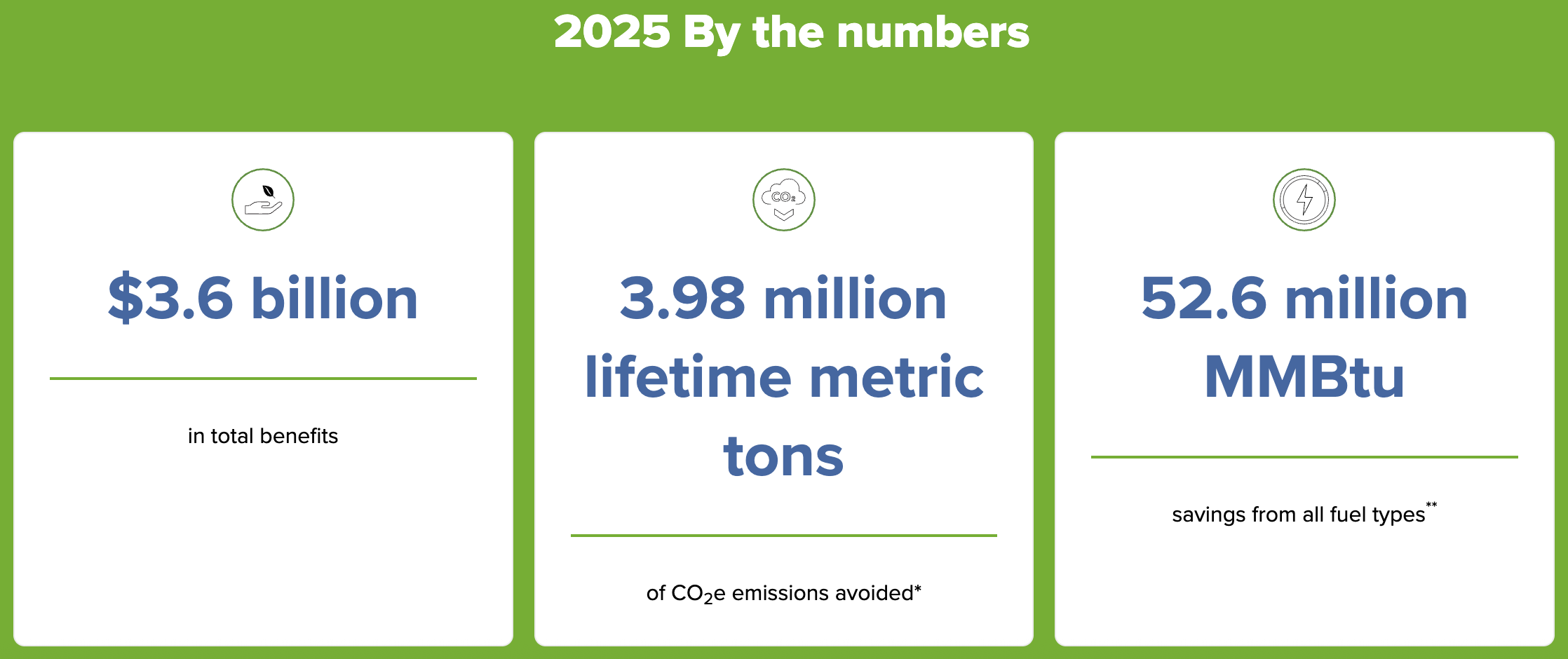
A screenshot of a few metrics from the Mass Save 2025 Annual Impact Report. Source: Mass Save
There is certainly plenty to criticize about Mass Save as it stands now, from equity issues to barriers to accessing its services and incentives. But it has historically helped state residents, delivering $2.4 billion in energy bill savings from 2022-2024. Slashing the resources of this program does not present any long-term solutions to address affordability or issues with the current utility business model. In fact, energy efficiency is key to reducing electricity demand—which MA has an explicit goal of doing—and to reach state climate goals (which will also be impacted by this bill). Additionally, essential programs that support energy efficiency and related jobs are likely to be threatened by the looming budget cuts.
Of course, we cannot ignore residents concerned about expensive heating and gas prices. But recent public opinion trends have pointed the finger and cast the blame onto a program that actually has more benefits than costs. This speaks to issues of messaging and education about Mass Save, energy efficiency, and drivers of utility bill costs. Cutting the budget risks reinforcing these misconceptions. And with even less funding, addressing Mass Save’s public perception and further improving its programs will be far more challenging.
The Senate is on track to release its affordability bill later this summer, leaving the future of Mass Save uncertain. To learn more, visit WBUR, "How an energy efficiency program in Mass. became so politicized".
To take action, contact your representative: “Hello, I’m [your name]. I live in [town], and I am calling to ask you to oppose Section 69 of the energy bill, which would cut Mass Save’s budget, and support Sections 14, 21, 25, and 26, which would protect residential customers from predatory third-party suppliers.” (Green Energy Consumers Alliance).