Third-Party Electricity Suppliers
In the US energy system, third-party electricity suppliers are companies that sell electricity to consumers rather than utility companies, giving consumers some control over their electricity. Third-party suppliers buy electricity in bulk from utility companies and then sell it to consumers at a competitive (i.e, lower) price than utilities, while also tending to have more flexible contracts than utility companies. However, third-party suppliers have a history of exploiting vulnerable consumers, including low-income individuals, individuals with low English proficiency, and communities of color. Keep reading to learn more about third-party suppliers and how their practices can often be predatory.
Why do third-party electric suppliers exist?
Third-party electric suppliers—also referred to as competitive energy retailers or third-party electric retailers—exist because of deregulated state energy markets. All energy markets in the US were regulated until the 1990s. Consumers could only receive electricity from their local or incumbent utility. Eventually, policymakers felt this gave utilities too much power over electric prices. So, new laws were passed allowing for deregulated markets and, in turn, non-utility companies to sell electricity to consumers. Fourteen states, including Massachusetts, now have third-party suppliers. The goals of deregulation and third-party suppliers were to bring down electricity prices through competition and offer consumers more choice and control. Massachusetts deregulated its energy markets in 1997, and third-party electric suppliers began selling soon after. For a while, they did reduce energy bills for their subscribers. But it only lasted until 2002.
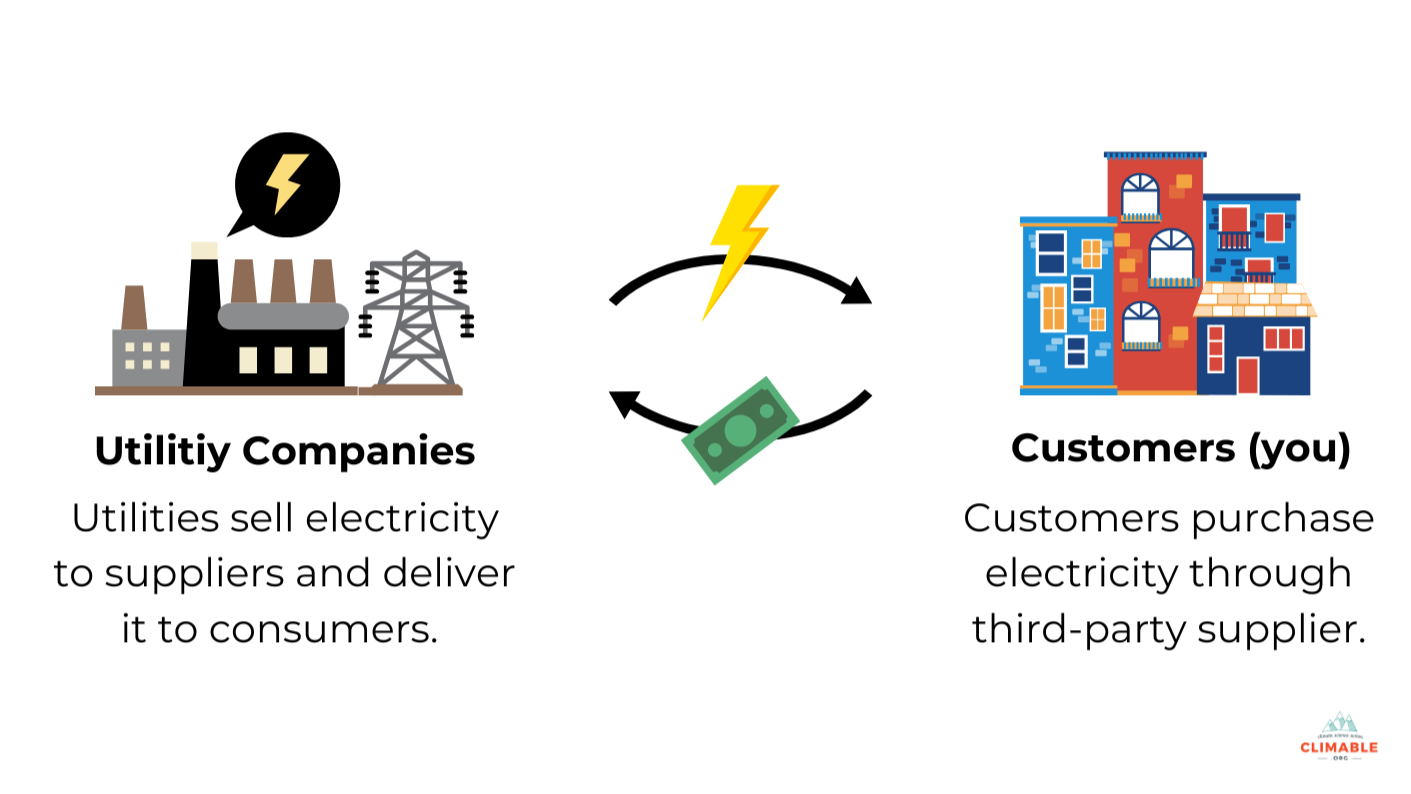
When your electric supplier is your utility, you pay the utility for both supply and delivery of your electricity. Graphic: Climable, 2024
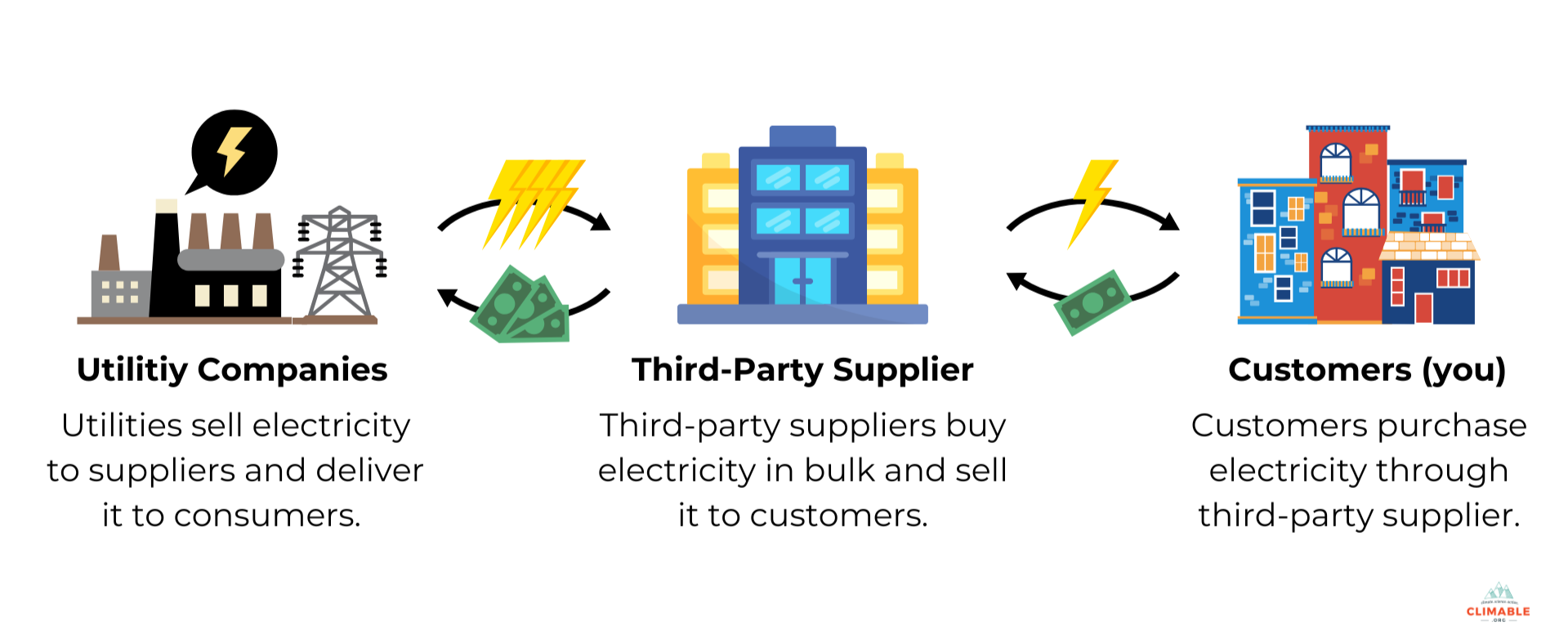
When your electric supplier is a third-party company—i.e., not your utility—then you pay a supplier for your electricity and the utility for delivery. The supplier purchases electricity in bulk from utilities and generation plants, and sells it to customers Graphic: Climable, 2024
Can third-party electric suppliers save you money?
It’s common for a third-party electric supplier to advertise that they will save you money on your electric bill. And they may, for the first few months. However, this often changes with time. According to a 2026 report released by the Massachusetts Attorney General's Office, from July 2024 to June 2025, consumers who switched to competitive supply (third-party) experienced net losses of $87.4 million. Over ten years, this is a net loss of $738.7 million compared to ratepayers who did not participate in the competitive supply market and continued purchasing their electricity from their incumbent utility or municipal alternative. This is because consumers using third-party suppliers spent $0.18 per kilowatt-hour (kWh) on average, compared to the $0.14 per kWh average they would have paid on the basic utility plan. So, while some third-party suppliers might save you money, historically, this has not been the case.
How can third-party electric suppliers be predatory?
Third-party electricity suppliers have been credibly accused of predatory practices when attempting to gain consumers’ business. They target low-income and minority communities by often charging them higher rates than higher-income consumers for the same product. The same 2026 Attorney General’s report linked above found that the average annual loss for individual low-income consumers in the 2024-2025 period was $286, meaning they paid that much more than they would have with their utility, on average. For higher-income consumers, their loss was $181, meaning the households that could more comfortably afford their electricity bills paid less for their electricity than low-income households that might struggle to cover the cost of their bills. Low-income assistance programs designed to support such households were also victim to the third-party market, because less consumers were paying into these socialized programs. You can read more about this in the Attorney General’s report (start with page 2 of the Executive Summary).
Third-party suppliers are also known to go knocking door-to-door, pretending to be from a household’s utility company or town government in order to obtain their information and, at worst, sign them up for their electric supply program without providing accurate and clear information, and sometimes, even without their consent.
If you ever get a knock on the door like this, it’s either a scam or a predatory third-party retailer. Do not fall for it. Your utility company or government would not send people door-to-door to give or receive information to or from you. They would inform you by mail or email, never in person.
How can you tell who your energy supplier is?
To see who your energy supplier is, you can look at the most recent energy bill from your utility company. And yes, your energy bill still comes from your utility, even if you use a third-party retailer because the utility company is responsible for delivering the electricity via power lines.
You will find your supplier under the the “Electric Supplier Service” section on the third page for Unitil, the “Supply Services” section on the bottom of the second page for National Grid, the “Total Charges for Electricity” section on the second page for Eversource. Your supplier may be Unitil, National Grid, or Eversource, or it may be a third-party supplier if you’re subscribed to one. You can see which energy suppliers are available to you at Energy Switch Massachusetts.

On a Unitil bill, the supplier can be found under “Electric Supplier Service” on the top of the third page.
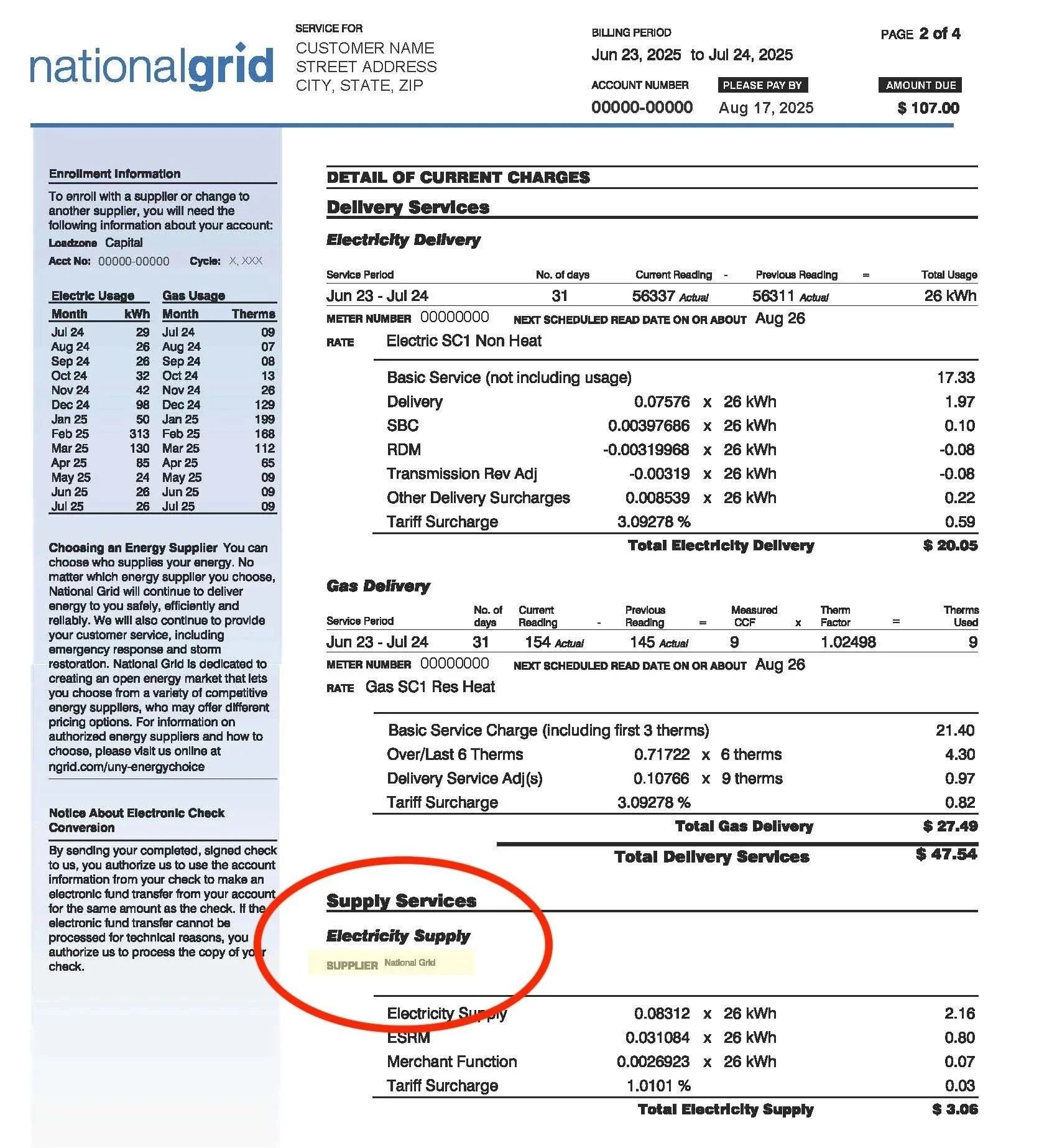
On a National Grid bill, the supplier can be found under “Supply Services” on the bottom of the second page.
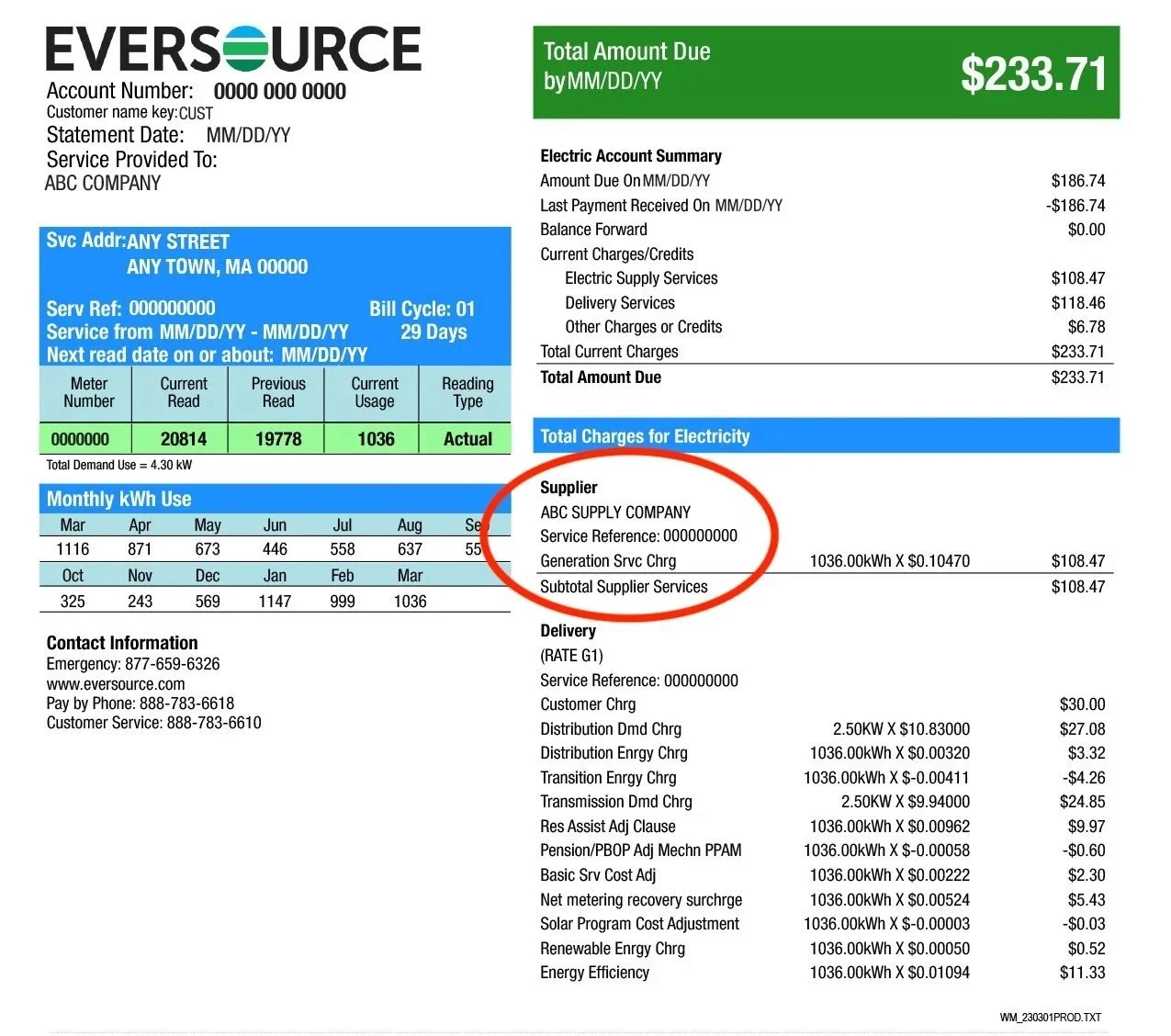
On an Eversource bill, the supplier can be found under “Total Charges for Electricity” in the middle of the second page.
What is the difference between third-party suppliers and community choice aggregation?
What is the difference between a third-party electric supplier and community choice aggregation?
Community choice aggregation (CCA), or municipal aggregation, is a program in which a town or city purchases electricity from a single supplier in bulk on behalf of its residents. They’re aggregating, or grouping, the area’s electrical demand into one. By doing so, local governments have leverage to negotiate a lower electricity price for residents compared to the cost charged by the incumbent utility. In addition to lowering prices, CCAs can help a city or town reduce its carbon footprint by switching to a supplier that produces clean energy at or below market rate. Many localities are adopting CCAs for this reason.
In many ways, a CCA is similar to a third-party electric supplier. They both can only exist in a deregulated energy market, like Massachusetts (multiple Mass municipalities have adopted a CCA including Boston, Cambridge, Lowell, and Worcester); both aim to give residents more control over where their electricity comes from; and both supply electricity to consumers in place of the local utility–while still relying on the utility’s transmission and distribution services (i.e., power lines).
A major difference between the two is that a third-party supplier is a private company, while a CCA is a program run by the city or town and is not driven by profit. For one, CCA programs are structured to provide residents with more transparency (private third-party suppliers often have little to none) and greater control over electricity costs and decisions (consumers can choose between CCA plans and un-enroll easily). Secondly, CCAs, as government-run programs, are subject to greater restrictions and scrutiny than a third-party supplier. This means that consumers on CCAs have more protection and means to dispute any issues that arise. To learn more about CCAs, click here.
What is the difference between third-party suppliers and community solar programs?
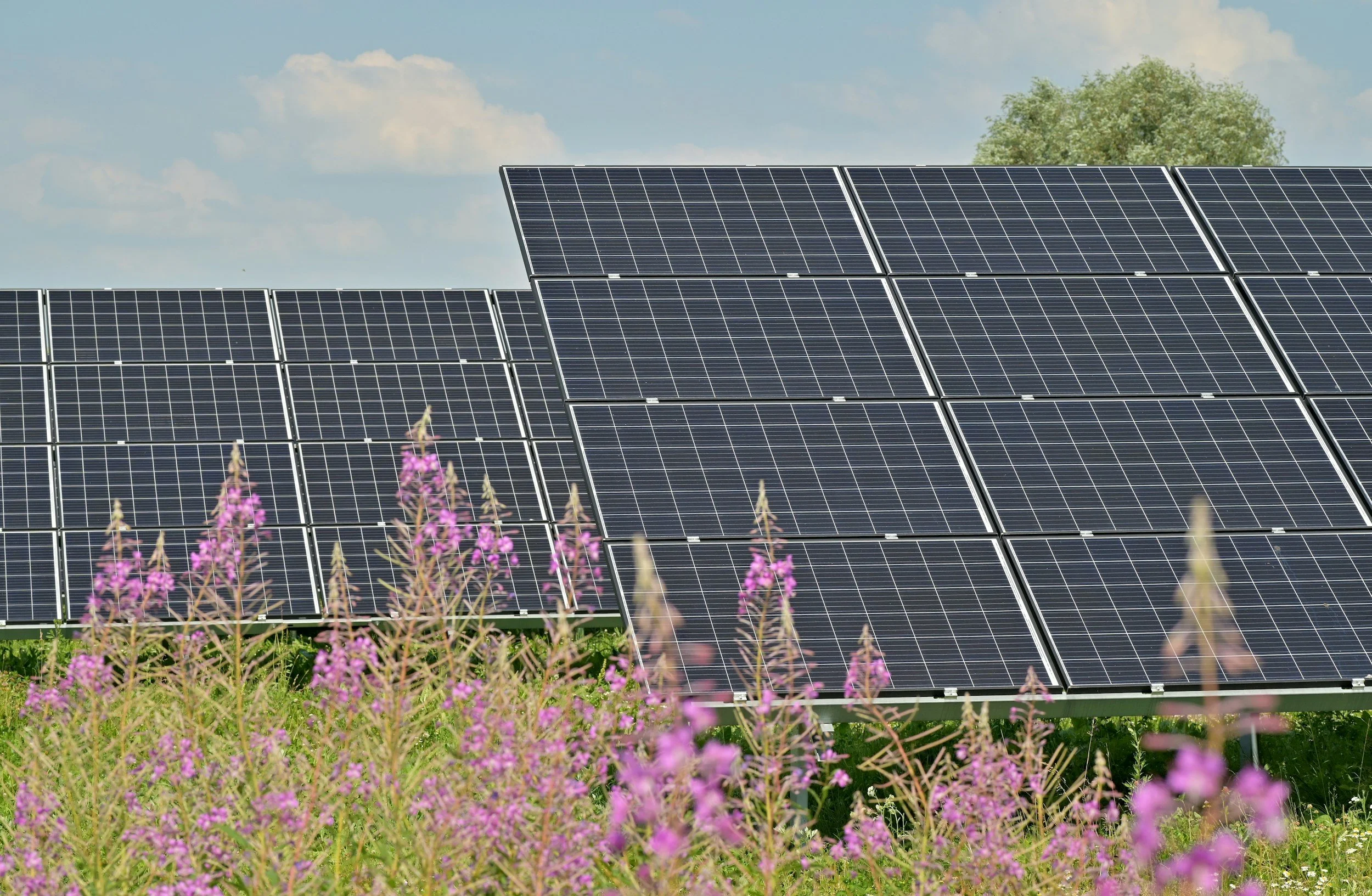
Community solar and third-party electric suppliers have many similarities–they both supply electricity to consumers instead of the local utility. Community solar programs provide electricity strictly generated from solar energy. On the other hand, third-party suppliers provide electricity from a mix of sources (i.e., varying percentages of oil, natural gas, and various renewables). Notably, community solar projects can be owned by third-party organizations. These third-party organizations take care of the maintenance of the solar arrays, often based on terms set by a Solar Power Purchase Agreement (SPPA). As is the pattern with third-party suppliers, community solar companies can also be predatory. For example, they can collect state and federal tax incentives without passing them on to their consumers, or they may charge higher than agreed-upon rates and provide limited customer service to help cancel a contract. These companies also often target low-income households and lock them into lengthy contracts that can harm the resale value of their homes if they try to sell before the end of their contract.
Current Massachusetts news regarding third-party electric suppliers
In February of 2026, Bill H.5715, “An Act relative to energy affordability, clean power and economic competitiveness,” was passed by the Massachusetts House of Representatives to give the Massachusetts Department of Public Utilities more tools to control the predatory practices of third-party suppliers. The bill proposes to bar third-party contracts for low-income households receiving utility discounts, create new requirements around transparency and licensing, and increase enforcement through the creation of penalties for violations. There is also a provision which, if passed, would allow towns to take municipal action to ban third-party suppliers overall. The bill is currently (as of August 2026) moving through the Senate. If it’s passed, it will mean increased regulation for third-party suppliers across the state, which will most likely benefit all electricity consumers.