
Why Green Does Not Always Mean Fair
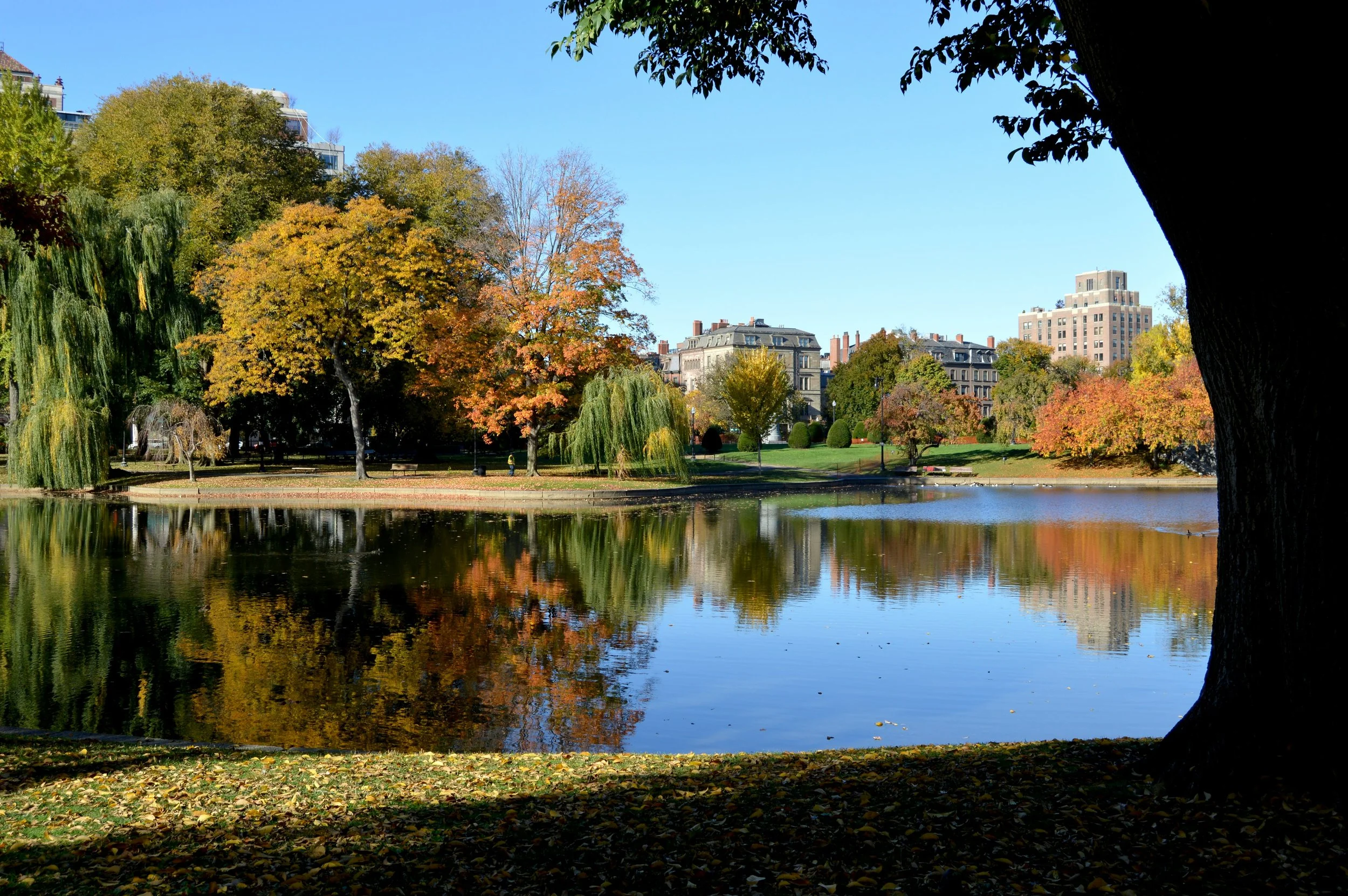
Photo: Daniel Bernal, 2020
by Adwoa Adobea-Owusu
Maria Lopez has lived in Boston for more than seventy years, forming ties with her neighbors who have become her family. Each morning, they bring food, help clean, and share their company—a routine kept for a decade. From her balcony, Maria watches the sun rise over the waterfront and its new parks and flood barriers. Developers now offer tempting prices for her home, yet she knows selling means she could never return. Maria’s story captures what many low-income residents face as green gentrification reshapes their communities.
Green gentrification refers to the pattern that occurs when sustainability projects increase property values and displace long-time, marginalized residents. This deepens inequality.
Cities across Massachusetts, including Boston, Somerville, and Cambridge, are advancing sustainability projects to address climate change. Yet, these efforts can drive gentrification. In East Boston, the Resilient Waterfront Project reduced flooding but also made the area more appealing to developers. This pushed property values up and threatened long-time residents. From 2014 to 2021, the median rent in East Boston rose by one-third, compared to one-quarter citywide. Experts predict Boston’s housing prices will take much longer to stabilize than the national average.
This phenomenon is not confined to Massachusetts. Globally, communities are facing similar challenges. In Indonesia, the Rempang Eco City Project has sparked protests from fishing communities who are being asked to relocate for a new "eco-development." In China's Yunnan province, hydropower dams threaten to submerge villages in Tiger Leaping Gorge.
In nearby neighborhoods such as Roxbury, Chelsea, and Dorchester, residents bear the weight of urban pollution, heat, and flooding. Without rent control or affordable housing measures, sustainability projects often attract private investment rather than serve public well-being.
The data support these concerns. In 2023, landlords filed over 3,000 monthly eviction orders, with an increase in Boston, Chelsea, and Revere.
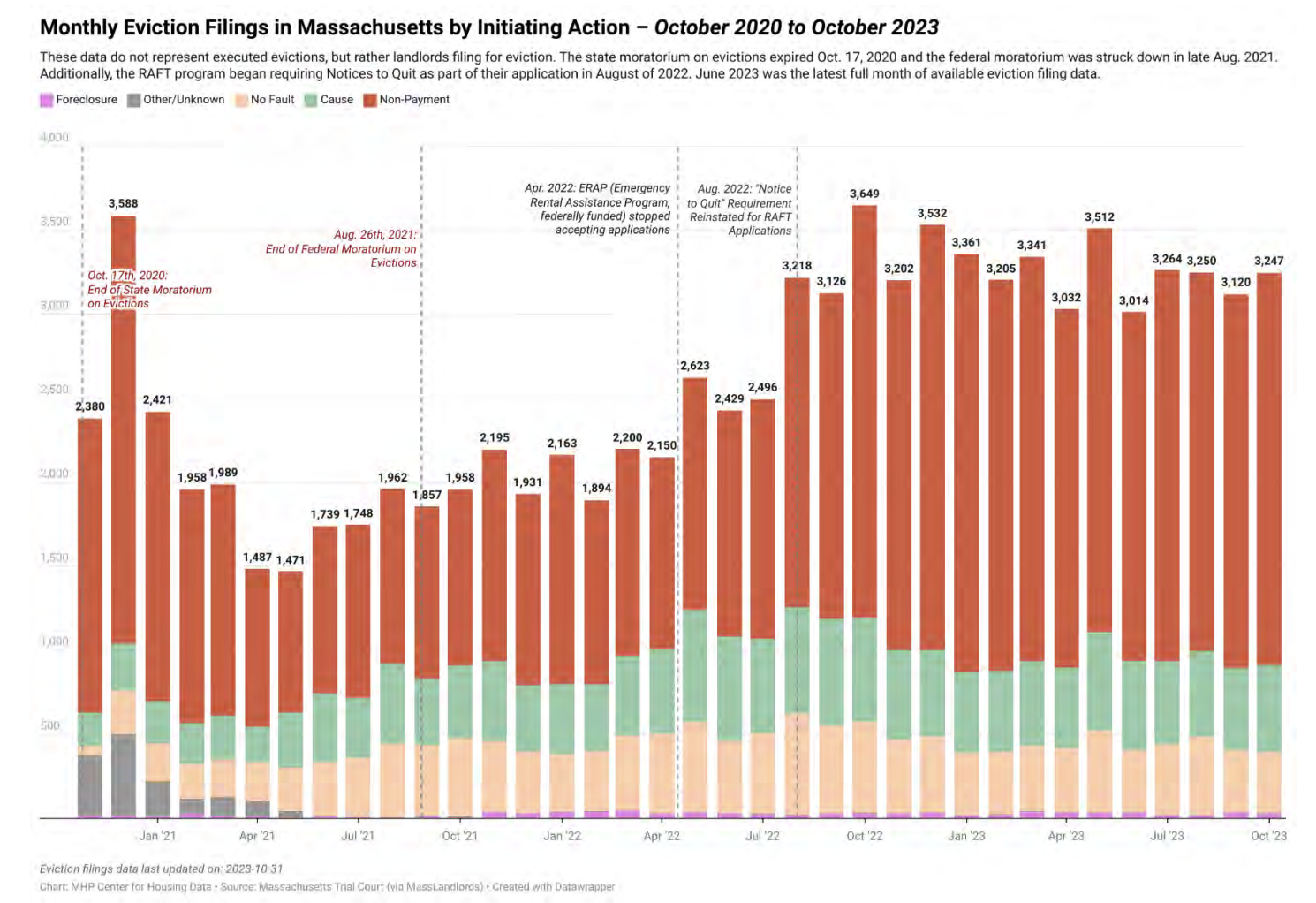
Eviction filings—when a landlord files paperwork with the state to evict their tenant—per month between October 2020 and October 2023. Significant state and federal housing policy changes are indicated by text and vertical, dotted lines. Chart: Massachusetts Housing Partnership, 2024
So, what can be done?
Community Benefit Agreements (CBAs) can help ensure that residents share in the benefits of green development. They can guarantee affordable housing, a voice in the project decision-making, and ensure skilled locals are hired. However, these agreements only work when communities are organized and consistently involved.
Climate investment should also be tied directly to anti-displacement protections. Cities can strengthen rent stabilization policies, expand affordable housing programs, and require that developers contribute to long-term community resilience. Green infrastructure should serve as a foundation for stability, not a trigger for loss.
Finally, more research is needed to understand the social and economic impacts of gentrification. Data on who is displaced, how neighborhoods are reshaped, and which interventions succeed will guide better policymaking and ensure that climate action remains fair and inclusive.
But beyond policy, this is about people. Maria’s story could easily belong to someone you know, a neighbor, a friend, or even yourself. Across Massachusetts and beyond, many families face the same uncertainty as green projects rise around them. The question is not whether we should pursue sustainability, but how we can do so without leaving anyone behind.
As individuals, we can support local housing justice groups, attend community meetings, and ask city officials how environmental projects address equity. We can also share stories like Maria’s, reminding others that the path to a greener future must include everyone who calls these neighborhoods home.