
Growing Together: Community Gardens in Food Deserts
by Sarah Davis
Have you ever struggled to find fresh, nutritious food at reasonable prices in your neighborhood? If yes, you might be living in a food desert. According to the US Department of Agriculture, food deserts are areas where 33% of the population lives more than a certain distance from the nearest grocery store—1 mile for cities and 10 miles for rural areas. Socioeconomic factors play a big part in whether an area has access to fresh foods. Research done by the Food Empowerment Project found that food deserts are predominantly found in Black and Brown communities and low-income regions due to historic racism and classism in America.
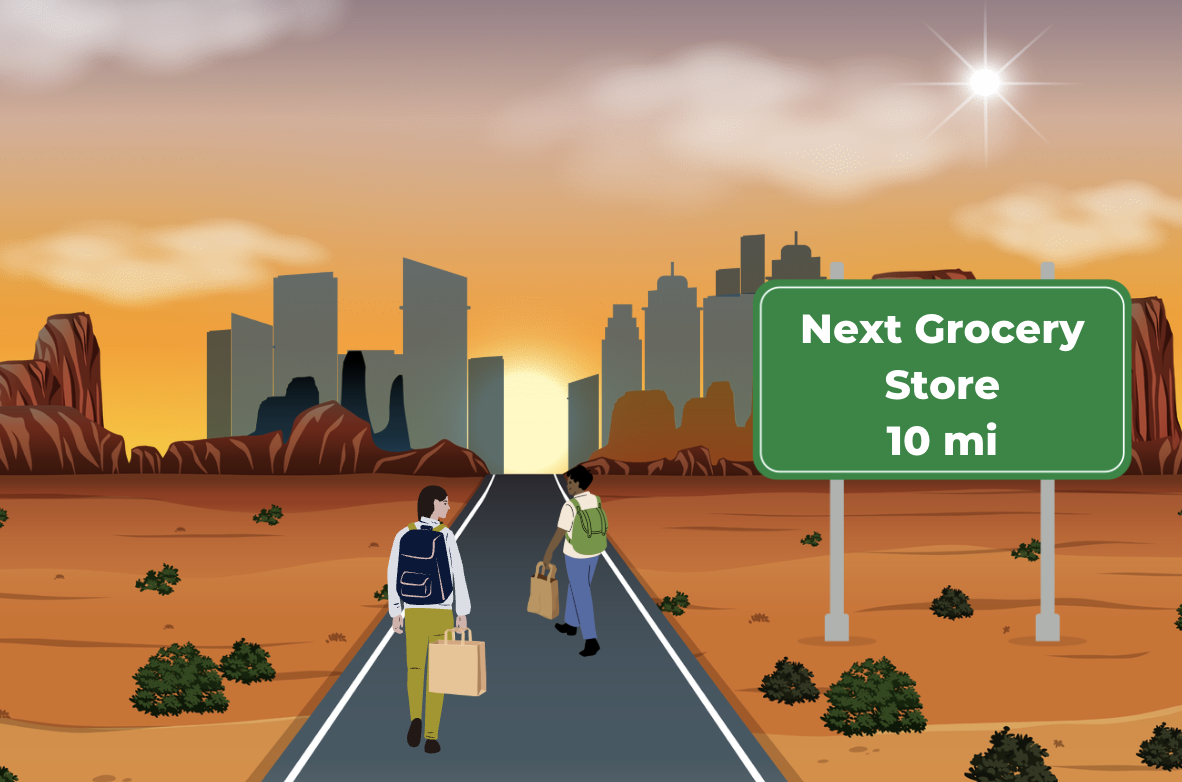
A symbolic illustration of a food desert. Graphic: Climable, 2024
We all deserve access to fresh and nutritious foods, so change needs to happen to eliminate food deserts. An easy change we can make right now is to implement community gardens. Community gardens provide a wide range of benefits to areas considered food deserts, the biggest and most obvious being access to nutritious food. In these shared gardens, community members can grow fruits, vegetables, and everything in between.
Community gardens provide a wide range of benefits to areas considered food deserts, the biggest and most obvious being access to nutritious food. Another positive impact is the mental health benefits. Human bodies naturally calm down in the presence of nature, which helps us recover from stress and mental exhaustion. Also, according to an article by Oklahoma State University, community gardens can help communities become more resilient by reducing air pollution, improving soil quality, enhancing water filtration, decreasing waste through composting, and even lowering crime in the surrounding area. Lastly, food desert areas experience the Urban Heat Island effect more strongly than surrounding areas. Having community gardens with green spaces helps reduce extreme heat during the summer months.
With all these benefits, it’s no wonder they’re cropping up all over the Boston area. According to the City of Boston's Open Space Plan, Boston alone is home to at least 175 community gardens. A great example of a community garden benefitting an area considered to be a food desert is the Squirrel Brand Community Garden. Located in the Port neighborhood of Cambridge, MA, this garden is located within a small park, right next to an affordable housing building and off a busy, multi-lane street. I have personally seen many people in the Port take advantage of this green space, whether gardening or spending time with loved ones.
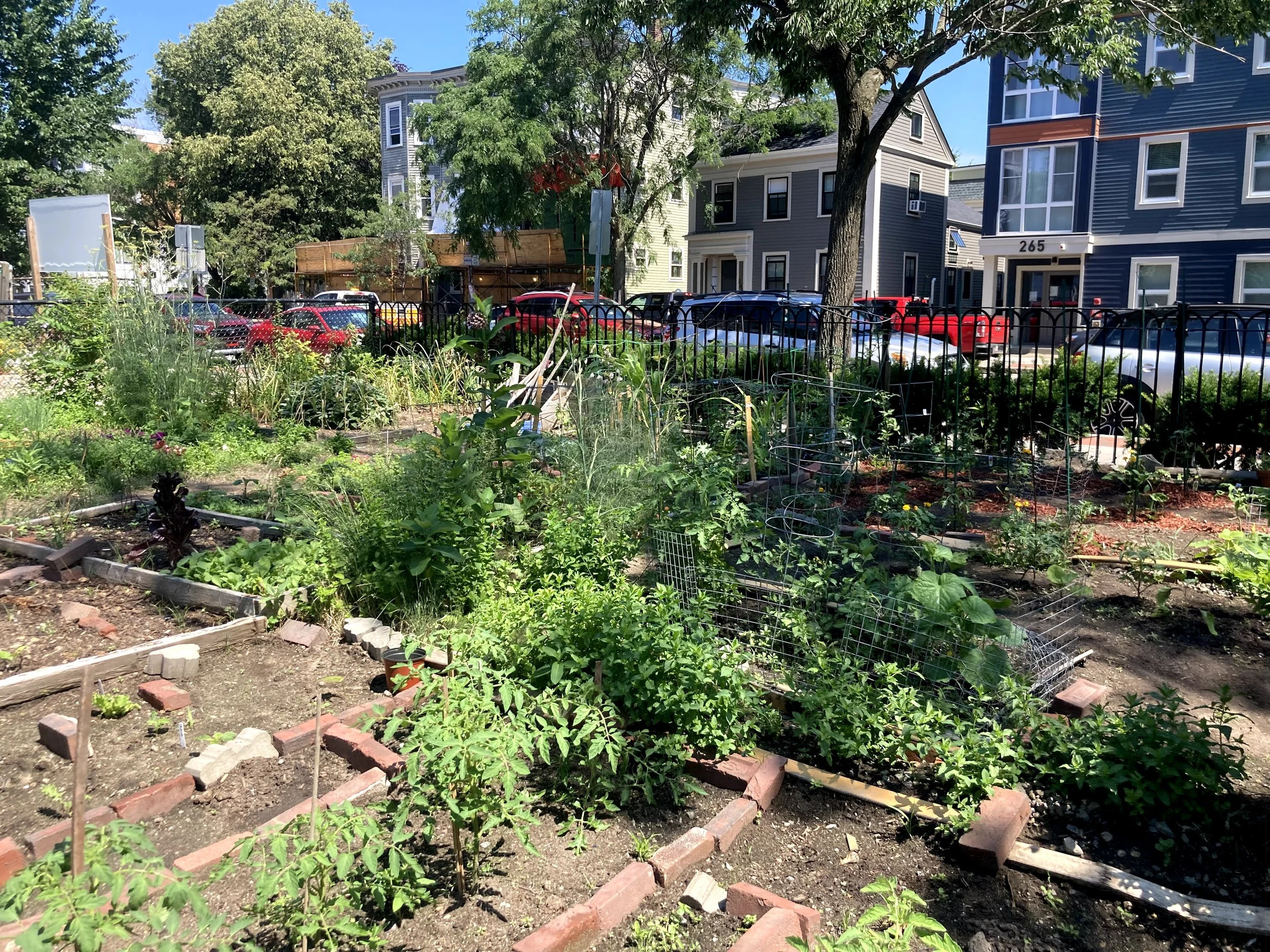
A photo of Squirrel Brand Community Garden with plantings all kinds, some in garden beds or pots, and others directly in the ground. Photo: City of Cambridge, 2021.
If you live in an area with limited access to nutritious foods, finding a community garden near you is one way to grow the foods you want to eat yourself. The Trustees provided a list of 56 community gardens in the Boston area to help find one near you. You can also explore your neighborhood to see if you can spot any. If you can’t find a community garden near you, educating your neighbors about the benefits of adding a garden and advocating for one with community leaders are essential steps toward a better future.